The look and feel of your workplace, whether it’s a commercial office or laboratory, can have a significant influence on how employees feel, interact and perform throughout the working day.
There’s a reason why forward-thinking businesses invest in comfortable breakout areas, collaborative spaces, inspiring interiors and even games rooms. However, creating a productive workplace involves much more than introducing a pool table or a few colourful sofas.
Thoughtful office design brings together lighting, acoustics, temperature, furniture and workplace layout to create environments that support different activities and working preferences. When these elements are carefully planned, employees can benefit from greater comfort, fewer distractions and more opportunities to collaborate.
A successful workplace should also reflect the culture and operational requirements of the business. After all, an environment that works for a creative agency may have very different requirements from one designed for a technology company or scientific research organisation.
Through considered commercial office interior design, businesses can create inspiring environments that support employee wellbeing while providing the practical facilities needed for productive working.
Here are COEL’s ten office design tips for creating a more productive workplace.
We’ve all experienced an office where the air conditioning is working overtime, leaving some employees reaching for an extra layer while others are still feeling too warm.
Temperature and ventilation can have a considerable impact on workplace comfort. An office that is consistently too hot, too cold or poorly ventilated can make it difficult for employees to concentrate on their work.
Maintaining comfortable conditions requires more than simply adjusting the thermostat. The building’s heating, ventilation and air conditioning systems should be appropriate for the size, occupancy and activities taking place within the workplace.
Here’s how to improve temperature control:
Indoor planting can contribute to the appearance and atmosphere of an office, but it should not be relied upon to remove airborne pollutants or replace effective ventilation.
Colour plays an important role in shaping the character of a workplace. From calm, neutral tones to vibrant feature walls and statement furniture, the right palette can create an environment that reflects the personality of a business.
Although individual responses to colour vary, carefully selected colours can help distinguish working areas, reinforce brand identity and influence how a space feels.
The most effective approach is to select colours according to the purpose of each area rather than assuming that one particular shade will automatically increase productivity.
Here are a few ways to incorporate colour into your office:
Colour should also be considered alongside lighting, accessibility and visual contrast, particularly where signage and wayfinding are important.
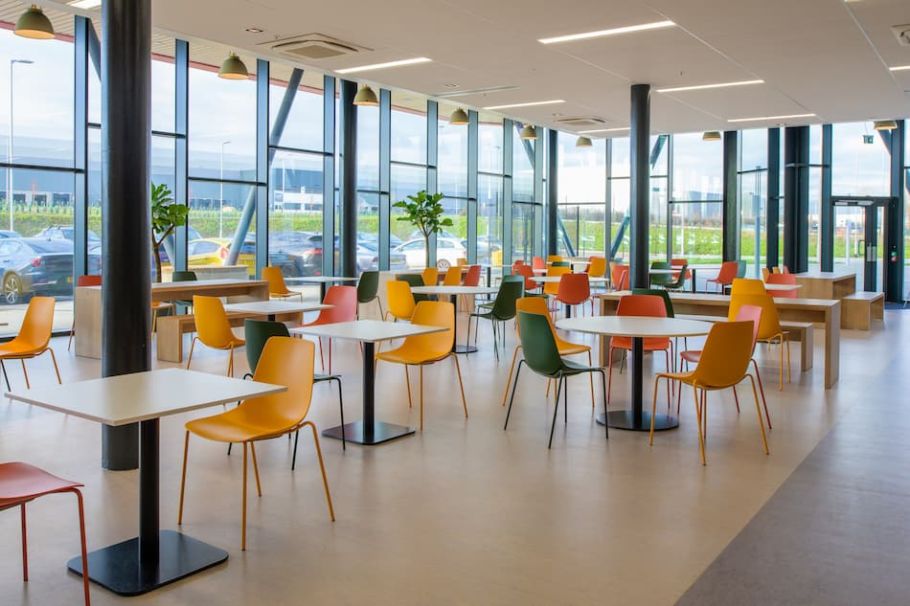
COEL’s furniture design and installation for food manufacturer McCormick & Co in Peterborough demonstrates how a distinctive colour palette can bring energy and personality into a commercial workplace.
Inspired by the company’s identity, vibrant citrus shades of lemon, orange and lime were incorporated throughout selected areas of the office.
The boardroom features striking scarlet chairs, creating a bold setting for meetings and discussions, while the ground-floor communal area introduces a lively mix of colours and comfortable furniture.
The result is a workplace that reflects McCormick & Co’s brand while providing a variety of professional and informal environments for employees.
Introducing natural elements into the workplace can help create a more welcoming and visually engaging environment.
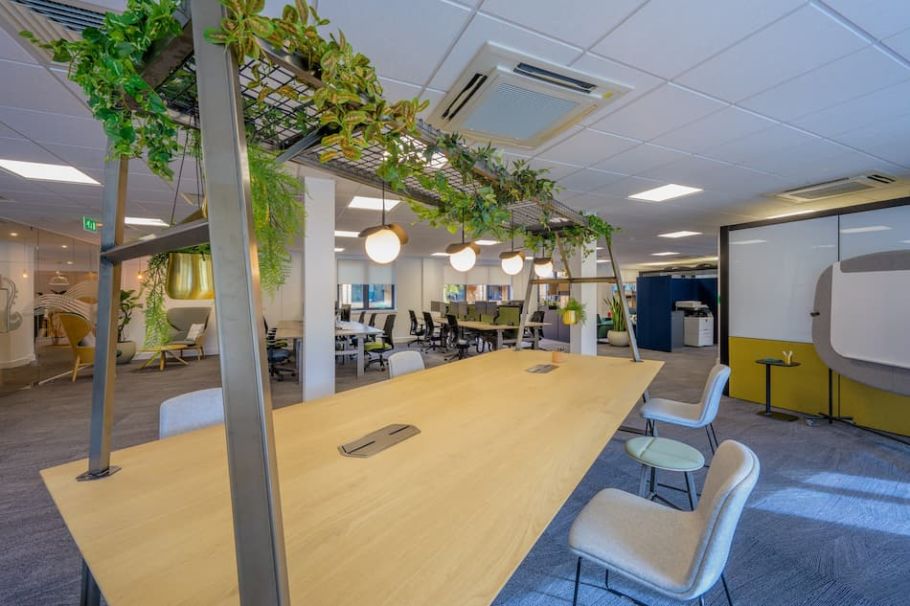
Biophilic design focuses on strengthening the connection between people and nature through planting, natural materials, daylight and views of the outdoors.
These features can contribute to employee wellbeing and provide a welcome contrast to the technology and artificial materials often found in commercial offices.
However, successful biophilic design involves more than placing a few plants around the workplace. The greatest impact comes from incorporating natural elements into the wider interior design.
Here’s how to introduce biophilia into your office:
Natural sounds and scents may appeal to some employees, but they can also create distractions or discomfort for others. Any sensory features should therefore be introduced carefully, particularly in shared working environments.
A thoughtful approach to biophilic office design balances natural features with the practical needs of employees and the wider workplace.
Open-plan offices can provide valuable opportunities for communication and collaboration, but they can also create challenges when employees need to concentrate or work without interruption.
Breakout spaces offer an alternative to the traditional desk, providing somewhere for informal discussions, short meetings, individual thinking, or simply taking a break.
The most effective breakout areas are designed around how employees will actually use them, rather than being treated as additional seating within an otherwise unused corner.
Here’s how breakout spaces can support productivity:
Breakout spaces should also be positioned carefully to avoid introducing unnecessary noise into areas intended for focused work.
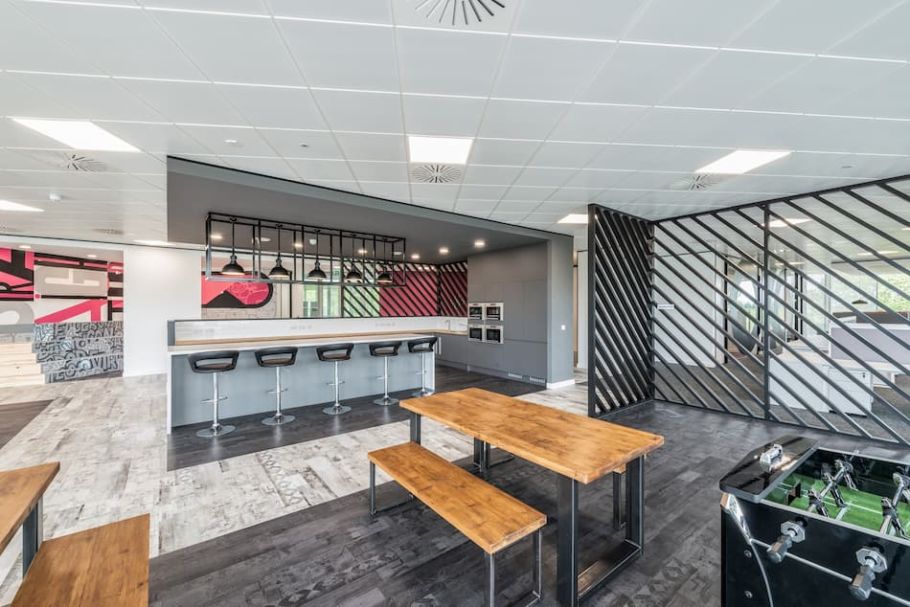
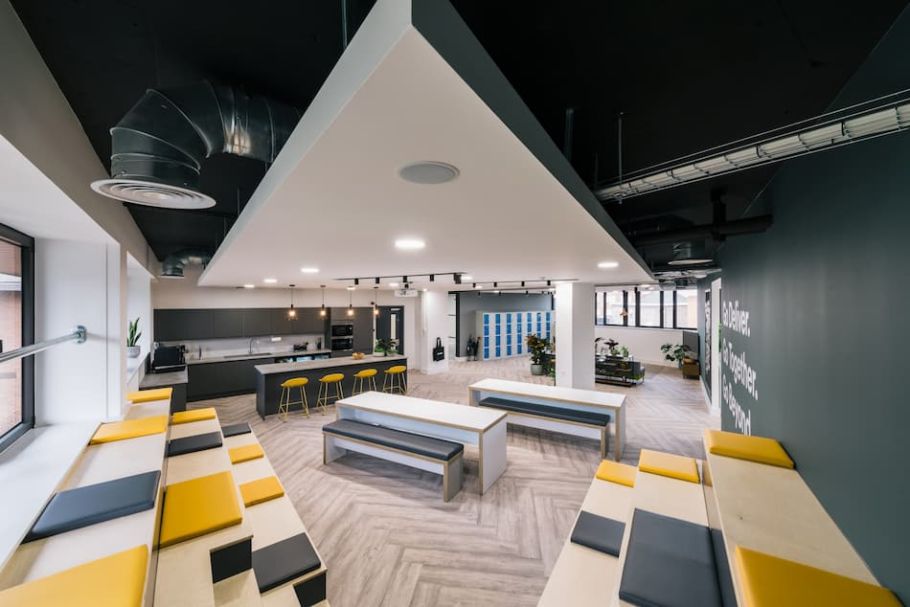
When working on the expansion of office facilities for award-winning digital agency Crafted, COEL created a variety of breakout environments designed to encourage interaction and collaboration.
One of the standout features was a bleacher seating area within the kitchen, providing a distinctive and practical space for employees to gather.
The raised seating arrangement makes effective use of the available floor space while introducing a more informal alternative to conventional meeting furniture.
Vibrant yellow and dark grey cushioned panels add character to the design, helping create an inviting environment that reflects the creative nature of the business.
The Crafted project demonstrates how carefully planned communal spaces can support different working activities while contributing to the overall workplace experience.
Lighting is one of the most important elements of workplace design, influencing visual comfort, the atmosphere of a space and the ability of employees to carry out different tasks.
Poor lighting can contribute to eye strain and discomfort, while excessive glare or unsuitable illumination may make screen-based work more difficult.
Natural daylight is a valuable feature of commercial interiors, but it needs to be balanced with appropriate artificial lighting and effective controls.
Here’s how to improve workplace lighting:
Where natural light is limited, a carefully planned lighting scheme can help create a brighter and more comfortable working environment.
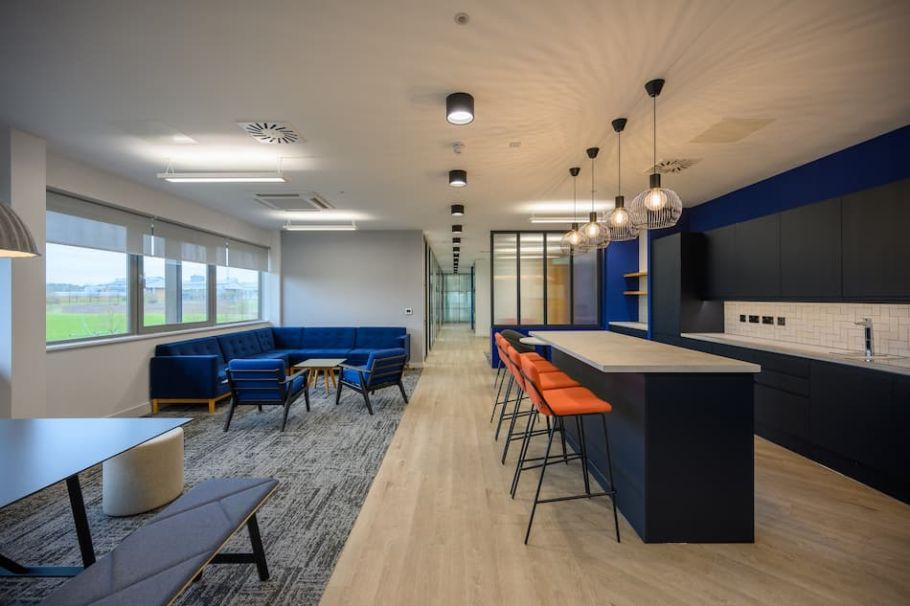
COEL maximised the available natural light when designing and fitting out a new office and marketing suite for BioMed Realty at Granta Park, Cambridge.
Large windows wrap around the office, providing impressive views across the surrounding parkland and lake while allowing daylight to reach the interior.
Glazed screening partitions were also incorporated into the design, helping natural light travel into an internal corridor without compromising the separation of different areas.
This approach creates a bright and welcoming workplace while demonstrating how glazing and space planning can work together to make the most of a building’s existing features.
Technology is an integral part of modern office design, helping employees communicate, collaborate and manage their daily responsibilities.
However, creating a technologically advanced workplace is not simply about installing the latest devices. The systems selected should be reliable, straightforward to use and appropriate for the activities taking place within the office.
When technology is incorporated into the design process, it can help reduce unnecessary interruptions and make different working environments more effective.
Here’s how smart technology can support workplace productivity:
Artificial intelligence and automation may also support certain administrative tasks, but businesses should assess the suitability, security and practical benefits of these systems before introducing them.
Technology works best when it supports the workplace rather than becoming an additional source of complexity.
A busy office can create an energetic and sociable atmosphere, but some activities require privacy and sustained concentration.
Telephone conversations, informal discussions and general movement can become distracting, particularly in open-plan environments where employees are working on different tasks.
Providing dedicated quiet areas gives employees greater choice over where they work and helps reduce the pressure on traditional meeting rooms.
Here are a few ways to create quieter working environments:
Quiet areas can also form an important part of neuro-inclusive workplace design, providing alternatives for employees who experience sensory sensitivities or find open-plan environments difficult to work in.
As part of an office refurbishment for Raspberry Pi, COEL installed four acoustic booths to provide employees with additional working environments.
The booths offer private spaces for meetings, telephone conversations and focused activities, while also helping divide the wider open-plan office.
Laurie Smith, Director of Operations at Raspberry Pi, explained that the booths were quick and straightforward to install and had become regularly used for meetings and quiet working.
He also highlighted their contribution to reducing noise within the open-plan environment and their versatility as comfortable, multifunctional additions to the workplace.
The project demonstrates how targeted furniture and acoustic improvements can address practical workplace challenges without requiring a complete redesign of the office.
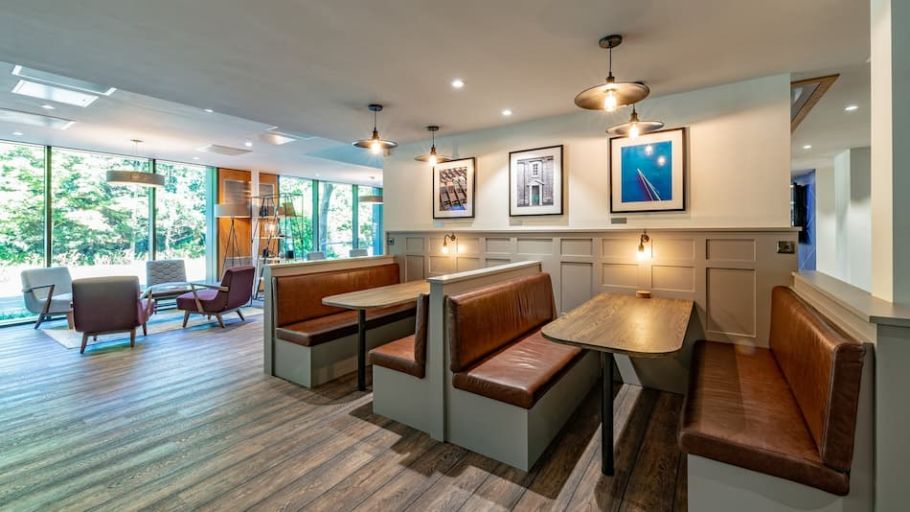
Collaboration is an important part of many modern workplaces, allowing employees to exchange ideas, solve problems and work together across departments.
However, successful collaboration requires more than placing employees in the same room.
The workplace needs to provide appropriate settings for different types of interaction, from formal presentations and project meetings to spontaneous discussions and informal conversations.
Here are COEL’s recommendations for encouraging collaboration:
The position and configuration of these spaces should form part of the wider office space planning strategy.
A well-balanced workplace offers opportunities for collaboration without compromising the privacy and concentration required for individual work.
Employees spend a considerable proportion of their working day using desks, chairs and other workplace furniture.
Unsuitable furniture can contribute to discomfort and make everyday tasks more difficult, particularly where workstations cannot be adjusted to meet individual requirements.
Ergonomic furniture should therefore be selected according to the activities taking place and the needs of the people using it.
However, adaptability extends beyond individual workstations. Furniture that can be moved, reconfigured or reused can also help businesses respond to changing working practices.
Here’s what we recommend:
COEL’s office furniture specialists help businesses select, source and install products that balance comfort, functionality and design.
Choosing durable, adaptable furniture can also support long-term value by reducing the need for unnecessary replacement as workplace requirements change.
A productive office doesn’t have to be a serious environment from the moment employees arrive until the end of the working day.
Introducing spaces for relaxation, social interaction and recreational activities can help create a more welcoming workplace and strengthen relationships between colleagues.
From game rooms and comfortable lounges to wellbeing facilities and informal cafés, these features can reflect the personality of a business while providing employees with opportunities to take a break.
However, the most successful recreational spaces are those that respond to the interests and requirements of the workforce rather than simply following the latest workplace design trends.
Here’s how a sense of fun can contribute to the office experience:
Recreational facilities should complement the wider workplace rather than replace the fundamentals of good office design, such as comfortable furniture, appropriate lighting and effective acoustics.
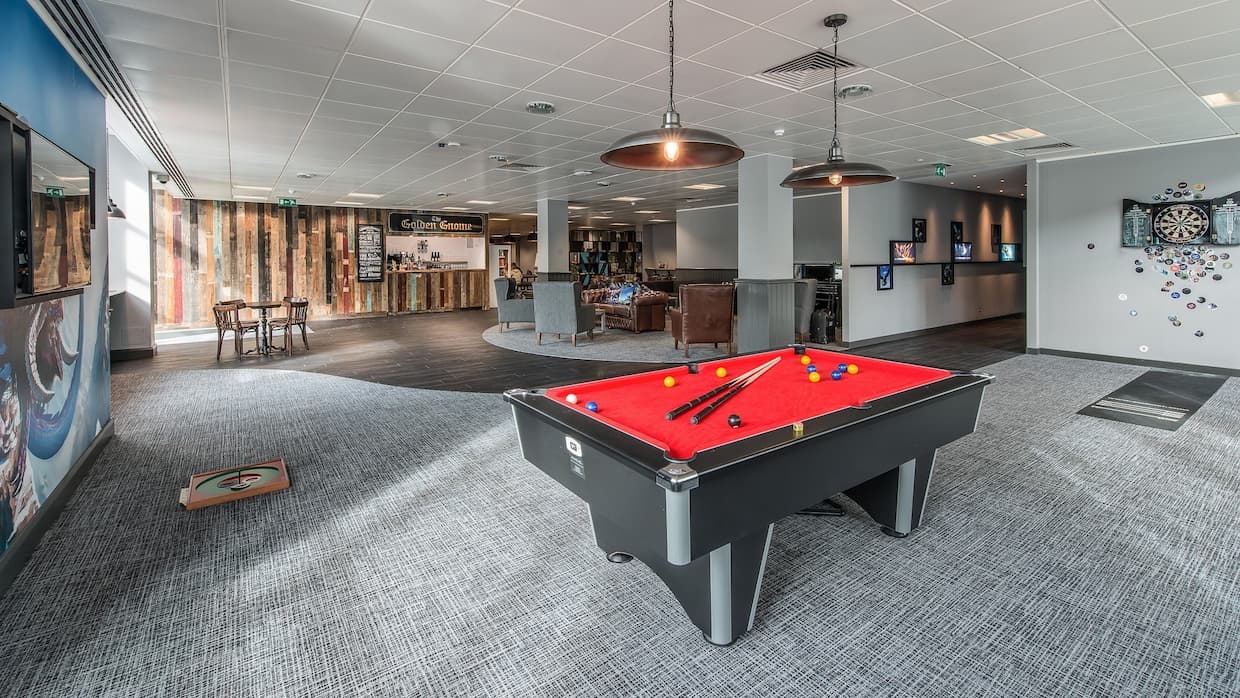
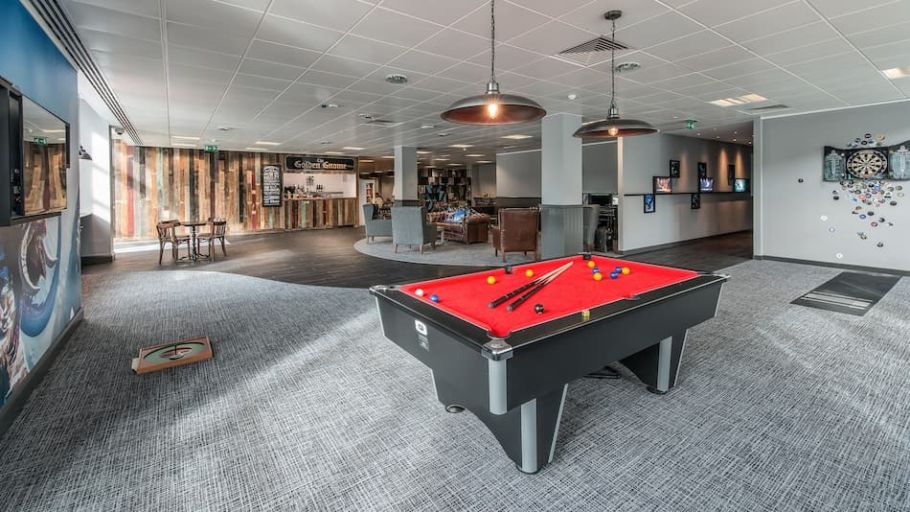
When video game developer Jagex appointed COEL to deliver its office design and fit-out, the brief called for a bold, funky, welcoming and inspirational workplace.
The company wanted to move away from conventional office environments and create spaces that reflected its creative culture while encouraging employees to interact and enjoy their time at work.
The finished workplace incorporated a dedicated gaming cave, an employee bar, comfortable soft seating and a recreational area featuring a pool table and piano.
Restaurant facilities provided additional opportunities for employees to come together throughout the working day.
These distinctive features were integrated into the wider office design, helping create an environment that reflects Jagex’s identity while supporting both professional and social activities.
The project demonstrates how a workplace can combine practical working facilities with spaces that encourage creativity, relaxation and a sense of community.
Productive workplaces are not created through one particular design feature or furniture choice. They result from carefully balancing the different elements that influence how employees experience their surroundings.
Temperature, lighting, acoustics, furniture and technology all contribute to the practical performance of an office. At the same time, colour, biophilic features and communal spaces help create an environment that feels welcoming and engaging.
The most effective workplace designs also recognise that employees have different requirements. Some activities benefit from open collaboration, while others require privacy, concentration or access to specialist facilities.
By providing a variety of working environments and ensuring the fundamentals of comfort and functionality are addressed, businesses can create offices that support employees and adapt to changing operational needs.
At COEL, we believe that inspiring workplaces should be designed around the people who use them and the activities they need to carry out.
With over 30 years of experience in commercial office design and fit-out, our integrated teams help businesses create functional, comfortable and engaging working environments.
From initial workplace planning and interior design to furniture selection, construction and ongoing building maintenance, we bring together the expertise needed to deliver commercial spaces that support business objectives.
Whether you’re planning a complete office transformation, refurbishing an existing workplace or looking to introduce new collaborative and quiet working areas, we can help develop a solution that reflects your requirements and budget.
Get in touch with COEL to discuss how thoughtful office design can help create a more productive and enjoyable workplace.
Prefer an AI Summary?